SPUR JOB CREATION
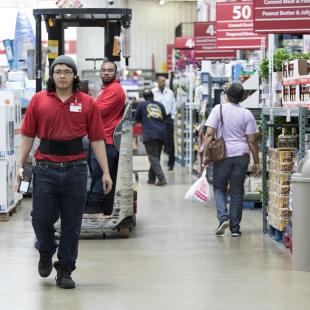
As one of America’s largest industry sectors, retail supports one in four American jobs and drives a large percentage of our nation’s new job growth. With unemployment at 9.1 percent in July, it is critical that every policy decision be viewed through the lens of whether it supports or hinders job creation.
Issue agenda:
- Encourage global trade: Smart trade policy that eliminates trade barriers at home and abroad and facilitates international commerce will help American companies grow and be more competitive, improve American families’ standard of living, and support and create American jobs. Retail operations and global supply chains alone support millions of American blue and white collar jobs not only in retailing, but also supporting industries such as manufacturing, agriculture and services.
- Reform the corporate tax system: Retailers pay the highest effective tax rate of any industry. Simplifying the tax code by eliminating special tax deductions and credits in return for lower rates will ease the retail industry’s tax burden so retailers can grow and create jobs.
- Promote sales tax fairness: Congress should establish a level playing field where all retailers collect sales tax regardless of whether they sell their products in stores, online or through the mail. Equal application of sales tax laws will protect local jobs at Main Street retailers. Read more...
- Eliminate visa delays, making it easier for more overseas travelers to visit the United States: This will reap economic dividends for businesses and communities across our nation. Overseas travelers spend an average of $4,000 each time they visit the U.S. Unfortunately, our difficult visa process drives millions of potential visitors to other countries. By removing visa barriers without weakening security, we can welcome millions more visitors, generate billions in new economic output and create more than a million U.S. jobs.
- Modernize our nation’s aging infrastructure: It is critical that the United States’ transportation infrastructure, including our ports, airports, rail lines and roads, meet the growing demands of our industry and growing population. Our nation must develop a national freight policy; prioritize the funding of freight-related transportation projects and move ahead with projects vital to supporting U.S. competitiveness, economic growth and job creation.
- Implement smart health care reforms: Finding a higher quality and more affordable solution to health care and coverage will benefit the entire retail community. NRF supports positive elements in the 2010 health care reform law while working to fix or repeal provisions hostile to the retail industry – such as the employer health care mandate. The retail industry is highly sensitive to rising labor costs and federal health coverage mandates will force many retailers to downsize their workforce.
- Support labor and workplace flexibility: Efforts to implement “card-check” union-organizing legislation or other onerous policies intrude on business operations, restrict an employer’s workplace flexibility, undermine employees’ privacy rights, and often lead to unnecessary costs for retailers.
ADVANCE INNOVATION
Retail fuels innovations that are transforming the world around us. Shopping is now a combined digital and physical experience enabled through mobile devices, social media, and other new technologies. Behind the scenes, technology streamlines the supply chain, which lowers costs and reduces unnecessary waste.
Issue Agenda:
- Protect consumer privacy while promoting innovation: NRF supports industry-led self-regulation, an approach that has a proven track record of responsibly balancing consumer privacy protections with the flexibility retailers need to serve their customers. Overly broad privacy legislation and regulation will stifle innovation and hamper the growth of online retail. Public policy must protect consumer privacy without hindering technological innovation.
- Promote advances in mobile payments: A policy environment that maximizes innovation and growth will benefit businesses and consumers alike. Mobile payments are an evolutionary advance in commerce, empowering consumers to purchase what they want, when and how they want it. Before lawmakers and regulators intervene in the development of this nascent technology, they must first consider its tremendous benefits and fully weigh the potential costs of any proposed regulation.
- Keep consumer data secure through self-regulation: Retailers have cultivated positive, long-term relationships with their customers by drawing upon customer data to anticipate and meet consumer demands. Safeguarding customers’ information is retailers’ chief concern, and allowing businesses the flexibility to innovate and adapt to new technologies through self-regulation is the most effective way to protect such information.
DRIVE CONSUMER VALUE
Retail is a highly-personalized industry focused on meeting consumers’ individual needs and preferences. That means retailers must enable consumers to make informed buying decisions in more convenient and cost-effective ways. The results empower consumers and put them in the driver’s seat like never before.
Issue agenda:
- Maximize supply chain efficiency: Retailers continually seek improvements in their supply chain operations to maximize efficiencies and lower prices for consumers. We support efforts to streamline the transportation of goods from manufacturer to retailer to customer and oppose regulatory proposals that lengthen the supply chain, raise transportation costs, or undermine the rapid delivery of affordable products.
- Combat organized retail crime: Comprehensive federal organized retail crime legislation is a necessity. Nine in ten retailers have been victims of organized retail crime – a $30 billion problem that not only hurts retailers’ bottom line, but presents potential health and safety problems for consumers and adds to the price of consumer products. The retail industry will support legislative efforts to stiffen the penalties for criminals and to give law enforcement the tools they need to go after organized retail crime.
- Reducing Swipe Fees: "Swipe" fees that banks charge merchants to process debit card transactions currently cost retailers and their customers an estimated $20 billion a year. But regulations approved by the Federal Reserve following NRF’s five-year push for swipe fee reform will cut debit card swipe fees per transaction roughly in half for the nation’s largest banks beginning in October. Retailers will pass most of the savings along to consumers through lower prices and other benefits, helping boost the U.S. economy. NRF sees this action as an important step toward swipe fee reform for credit card swipe fees, which could save retailers and consumers billions more, providing a significant boost to consumer spending and thus job creation.